In September, a course on ancient book restoration at Nanjing University filled its attendance capacity just 21 seconds after registration opened. With fewer than 20 places available each semester, the course gives students from different majors a chance to learn basic restoration techniques and complete the restoration of a replica of an ancient book.
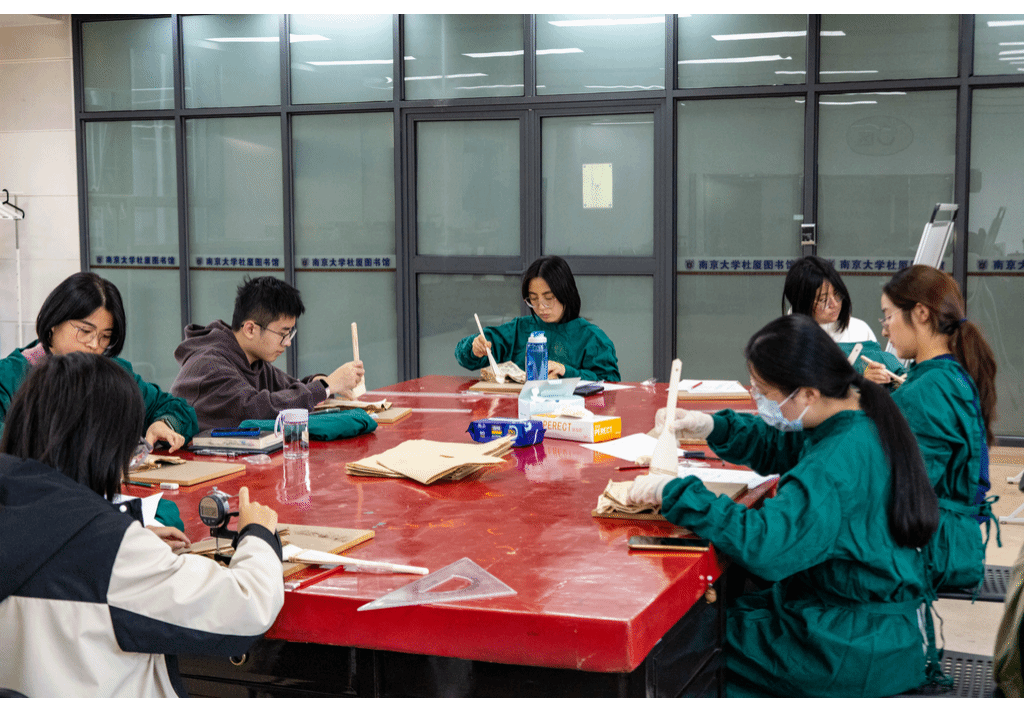
Students restore ancient books.
Inside the restoration room, students bend over damaged pages, carefully repairing holes and insect-eaten areas. Scissors, hammers, awls, brushes, tweezers, and paste are spread across the worktables. Over one semester, they will learn the basic process, from making paper pulp to binding books.
Before beginning hands-on work, students attend two theory lessons. Three teachers take turns introducing the historical background and stories behind the ancient books they will restore. "We think it is important for students to first understand what kind of book they are going to work on," said Chen Jing, a teacher of the course.
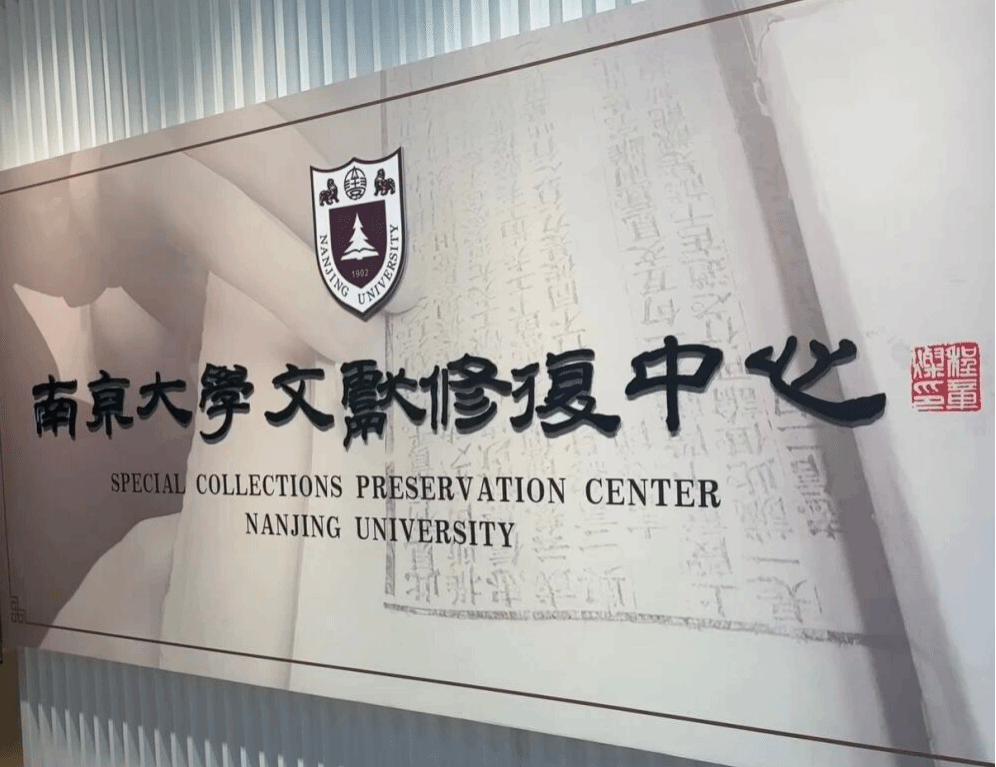
The Special Collections Preservation Center at NJU offers an extremely popular course on ancient book restoration
Meng Yihan, a doctoral student at the School of Artificial Intelligence, took the course by chance after seeing a poster in the library. He had expected a relaxing handicraft activity, but soon discovered that restoration required much more precision. One principle particularly impressed him: restorers repair the book, not the missing text. "Only the damaged paper can be restored. We cannot fill in text that has been lost," he said.
For Li Hui, a doctoral student in classical philology, the course changed her understanding of ancient books. After completing it, she stayed on as a student volunteer and gained opportunities to work on genuine books. "Restoration is also a process of practice and experience," she said, recalling how she repeatedly failed to align a book cover before a teacher helped her.
While carrying forward hand-preservation techniques, Nanjing University is simultaneously bringing modern technology into the mix. Non-contact scanning now allows ancient books to be digitized with less physical handling, while techniques such as acidity testing, paper-fiber analysis, and Raman spectroscopy assist conservation and restoration.
Writer: Sun Qi