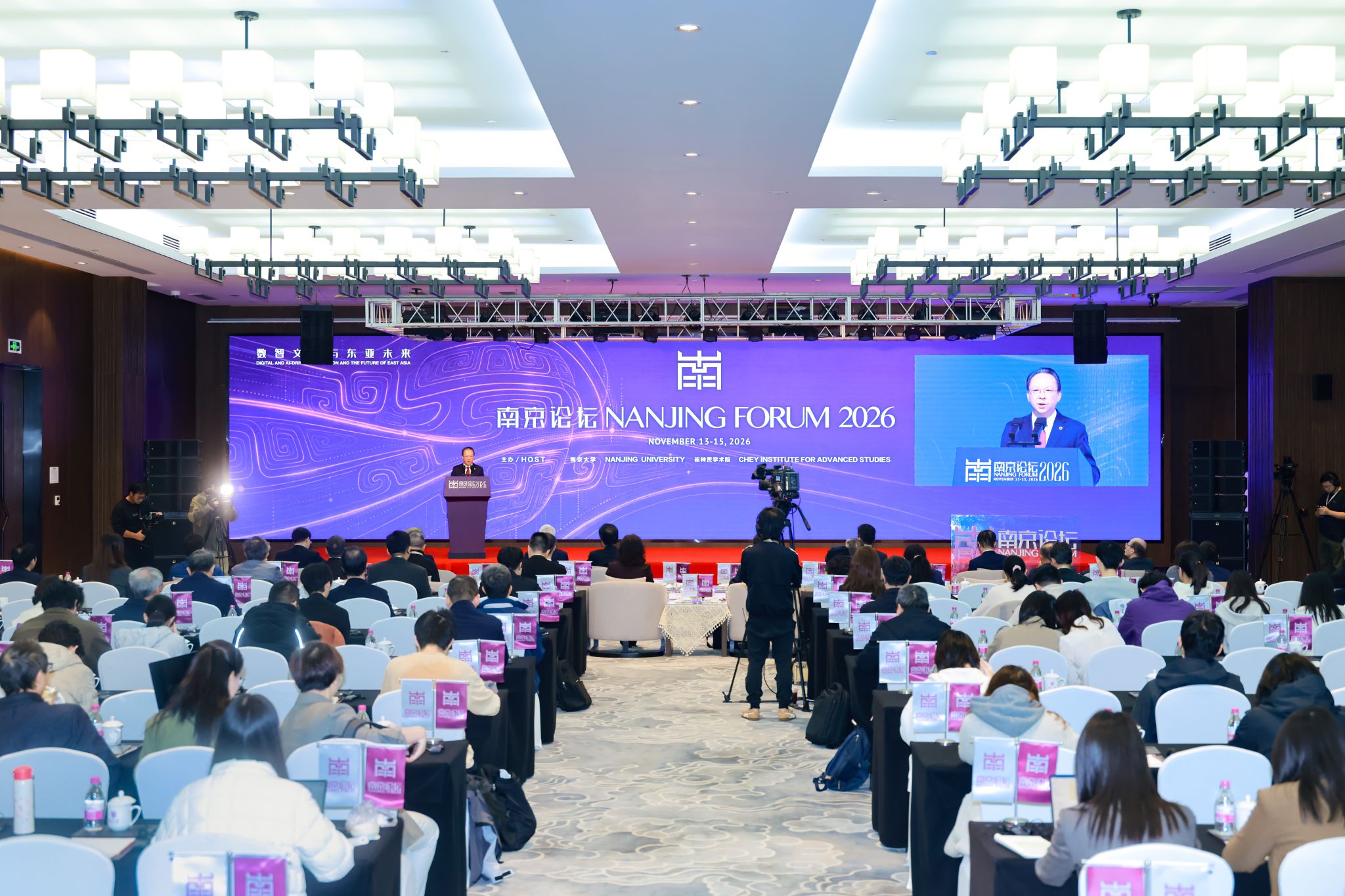
From November 13 to 15, the Nanjing Forum 2026, jointly hosted by Nanjing University and the Chey Institute for Advanced Studies, was held at NJU's Xianlin campus. With the theme of "Civilization of Digital Intelligence and the Future of East Asia," the forum welcomed over 200 experts, scholars, and guests from various fields across 10 countries and regions. Together, they explored the profound impact of digital intelligence technology on human civilization, examined paths for mutual empowerment between technological innovation and cultural heritage, and shared academic wisdom to contribute to collaborative development and cultural exchange in East Asia. Qu Futian, President of Jiangsu Association for Friendship and International Exchange; and Tan Tieniu, Chair of NJU CPC Council and Academician of the Chinese Academy of Sciences, attended the opening ceremony.
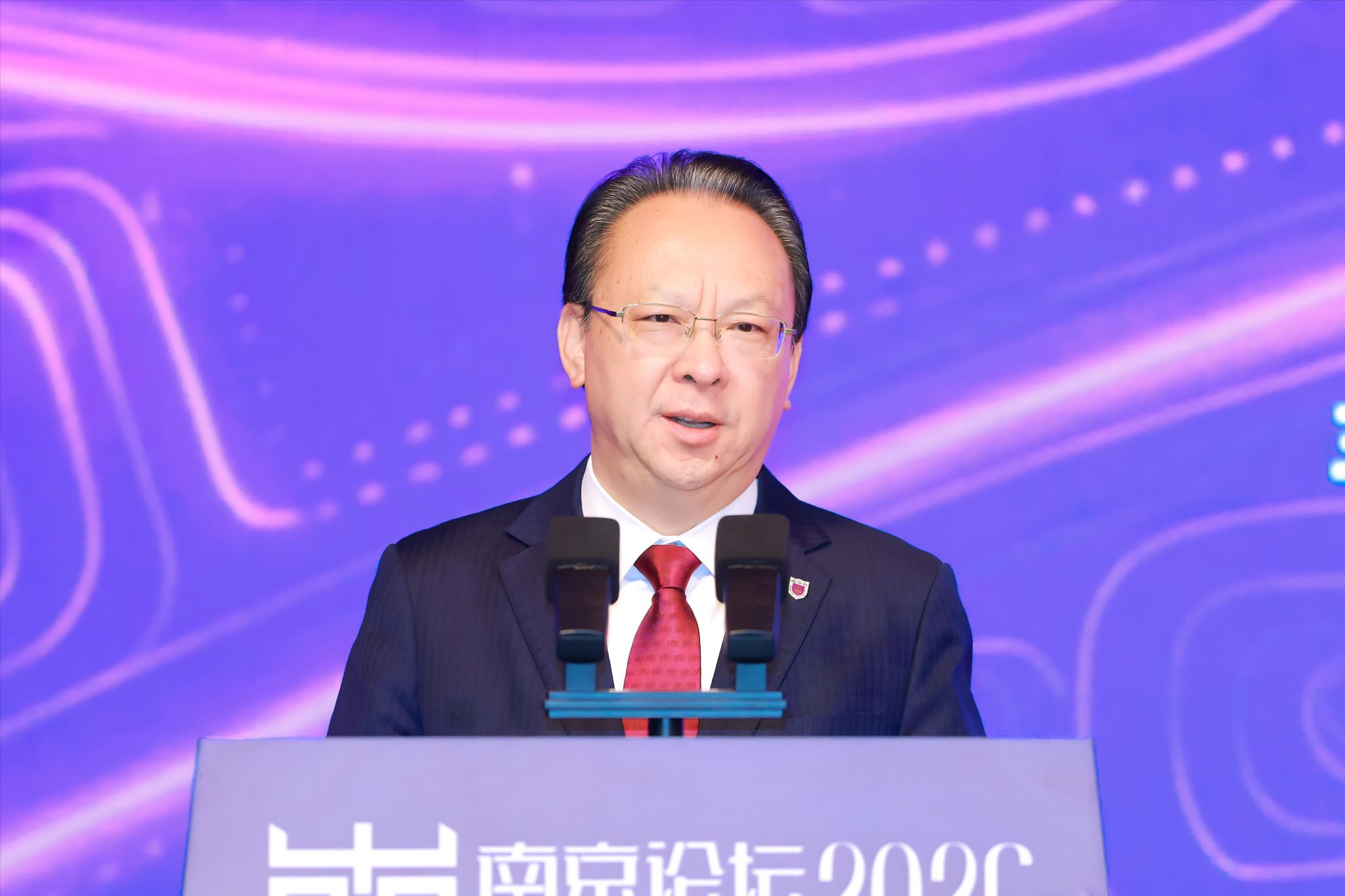
In his speech, Tan Tieniu pointed out that in today's world, a new wave of technological revolution and industrial transformation is progressing rapidly, with artificial intelligence emerging as one of its most defining forces. This year's forum theme, "Civilization of Digital Intelligence and the Future of East Asia," seeks to integrate the wisdom of science and humanities to explore the mutual achievements of technological advancement and civilization growth. He emphasized that East Asia is home to the world's most vibrant clusters of technological innovation while preserving millennia-old cultural traditions, presenting unique historical and practical advantages for developing a civilization of digital intelligence. Tan stated that NJU has long committed itself to activating profound cultural reserves through digital intelligence innovation and enriching digital intelligence with cultural depth. He called for embracing digital intelligence technologies with greater openness, fostering cultural exchange through pragmatic collaboration, and safeguarding human values with unwavering resolve. He expressed hope for collaboratively promoting the growth of digital intelligence civilization on East Asian soil, paving the way for a brighter future of human progress and prosperity.
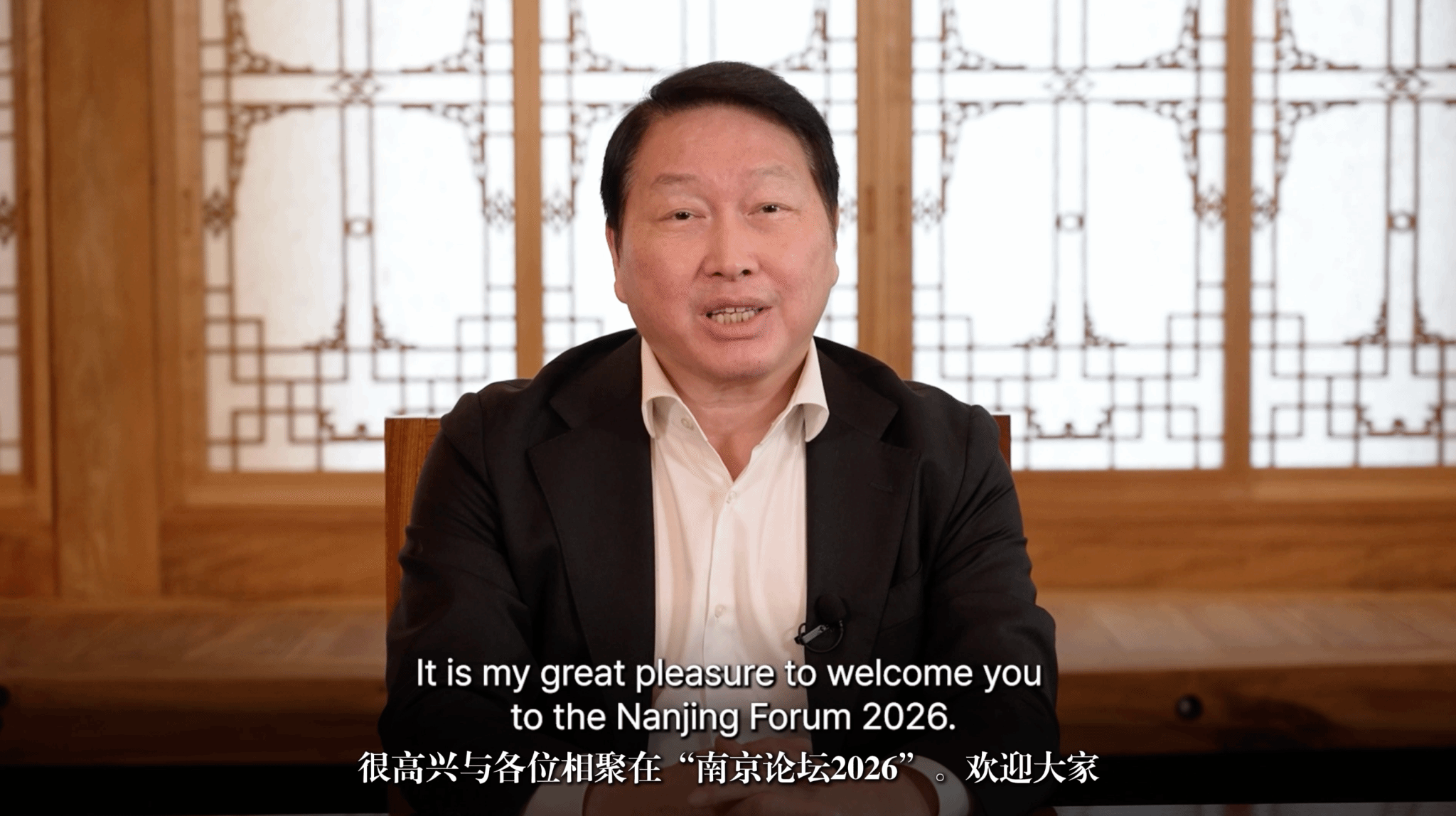
Chey Tae-won, Chairman of Korea's SK Group, delivered a virtual keynote speech emphasizing the need to rethink modes of work, learning, and collaboration to build an "AI-native society," which calls for deep transformations in mechanisms, organizations, and talent development. He highlighted the indispensable core skills for the era of artificial intelligence—critical thinking, adaptability, and empathy—urging universities and enterprises to encourage exploration and practice, and provide the younger generation with an environment that promotes risk-taking and tolerates failure. He further advocated that East Asian countries should learn from each other, deepen cooperation, and shape a civilization of digital intelligence infused with innovative vitality and humanistic care, enabling technological progress to enhance societal development capacities and expand opportunities for future generations.
Qu Futian stated that this year's forum provides an important platform for discussing the profound impact of technological transformation on civilization development while deepening East Asian cultural exchange. He noted that Jiangsu Province has a rich cultural legacy and active international engagement, offering fertile ground for fostering international cooperation. Jiangsu Association for Friendship and International Exchange has been actively building platforms for global dialogue, exploring ways to enhance cultural communication through digital technologies, and promoting understanding and friendship in international relations. He proposed adhering to openness and collaboration to expand the space for digital communication and cooperation, championing mutual respect and inspiration to advance cultural innovation, and committing to inclusivity and shared benefits for equitable digital transformation outcomes. He expressed hope that the Nanjing Forum would continue to serve as a bridge for pooling academic wisdom, strengthening collaboration, and laying a solid scholarly foundation to contribute to East Asia's growth. He envisioned the collective thoughts shared during the forum would transform into unified action for the future of East Asia.
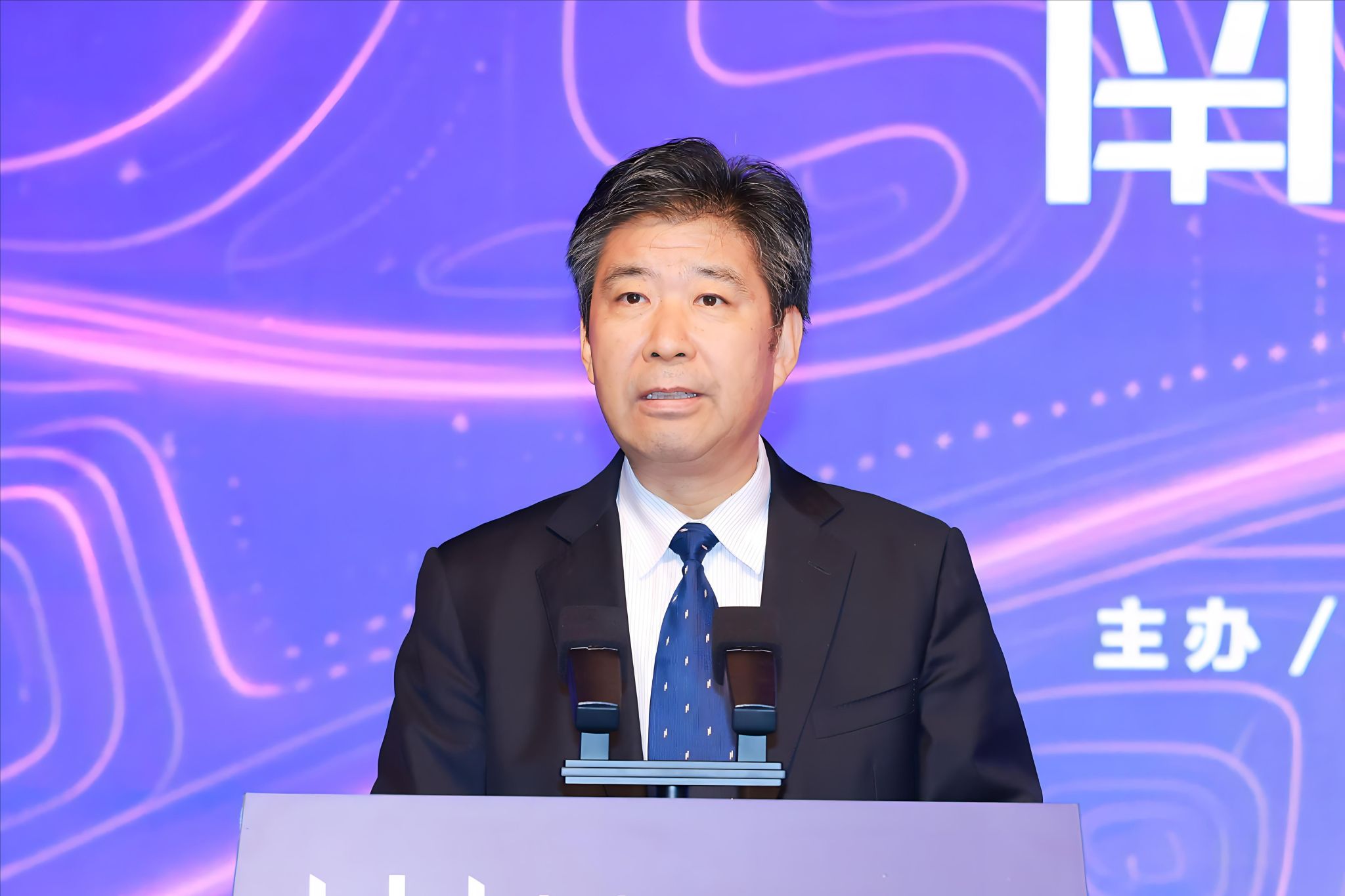
Zhan Zhemin, President of NJU and Academician of the CAS, attended the opening banquet and addressed the guests. Zhan extended a warm welcome to domestic and international attendees and thanked SK Group, the Choi Jonghyun Academic Foundation, and other longstanding supporters of the forum and the university's development. Over its 11-year history, the Nanjing Forum has consistently focused on peace, development, and prosperity in the Asia-Pacific region, promoting understanding through scholarship and friendship through dialogue. He expressed hope that the attendees would converge their ideas and efforts to contribute to the shared prosperity of the Asia-Pacific region.
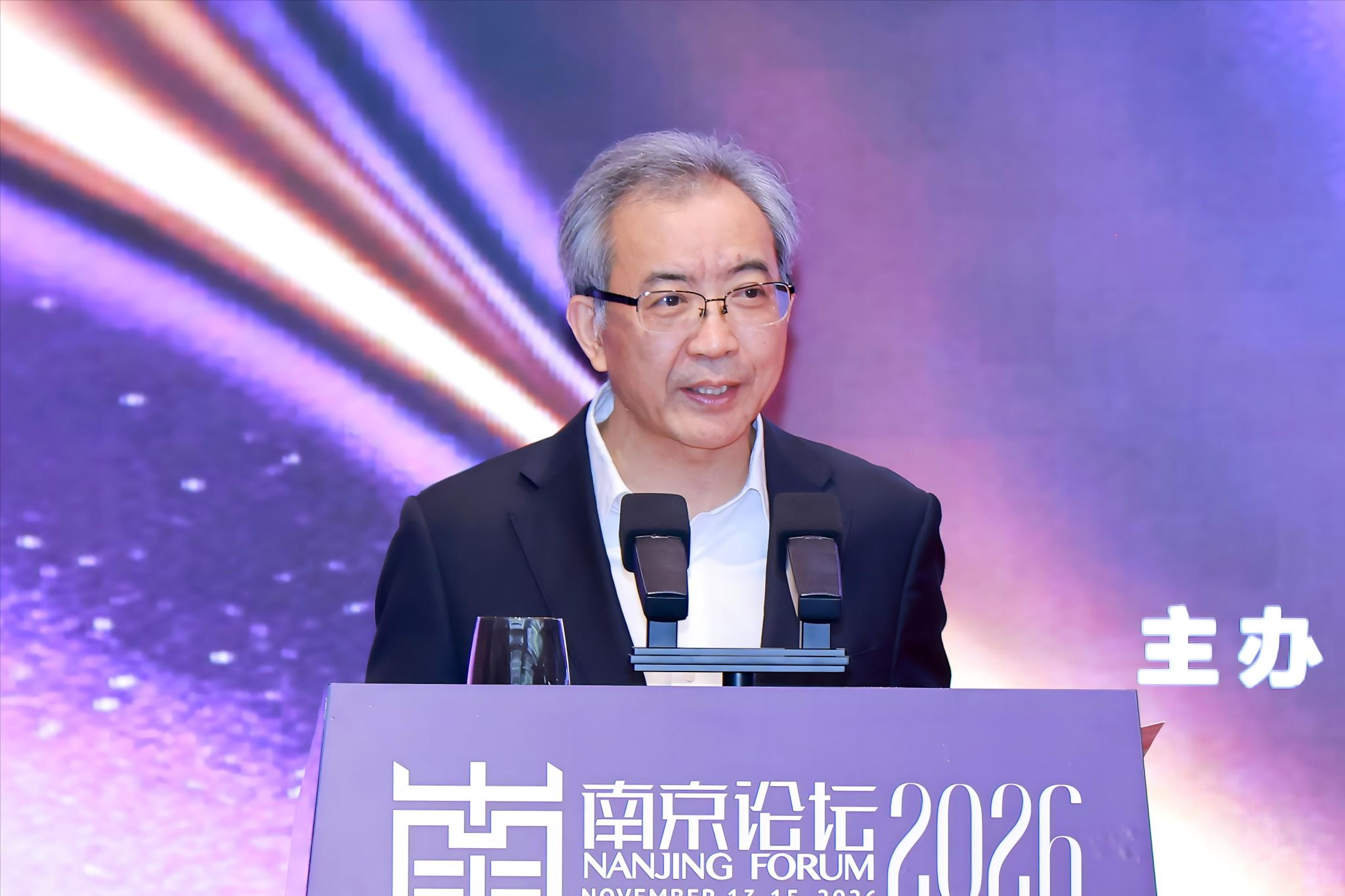
During the closing ceremony, Zheng Hairong, Member of the Standing Committee of CPC NJU Committee, Executive Vice President of NJU, and Academician of the CAS, delivered a speech titled "Scientific Revolution and Future Industries." He provided an in-depth analysis of the historical progression and evolving trends of the global technological revolution and industrial transformation, specifically focusing on brain-computer interface technology as a critical frontier. He showcased his team's cutting-edge achievements in this area and envisioned the future direction of such technologies and their potential to drive industrial change. Zheng asserted that the integration of carbon-based intelligence and silicon-based intelligence should evolve toward seamless co-existence, supported by artificial intelligence and interdisciplinary coordination. He urged proactive planning for future industry layouts to seize strategic opportunities in upcoming scientific and industrial revolutions.
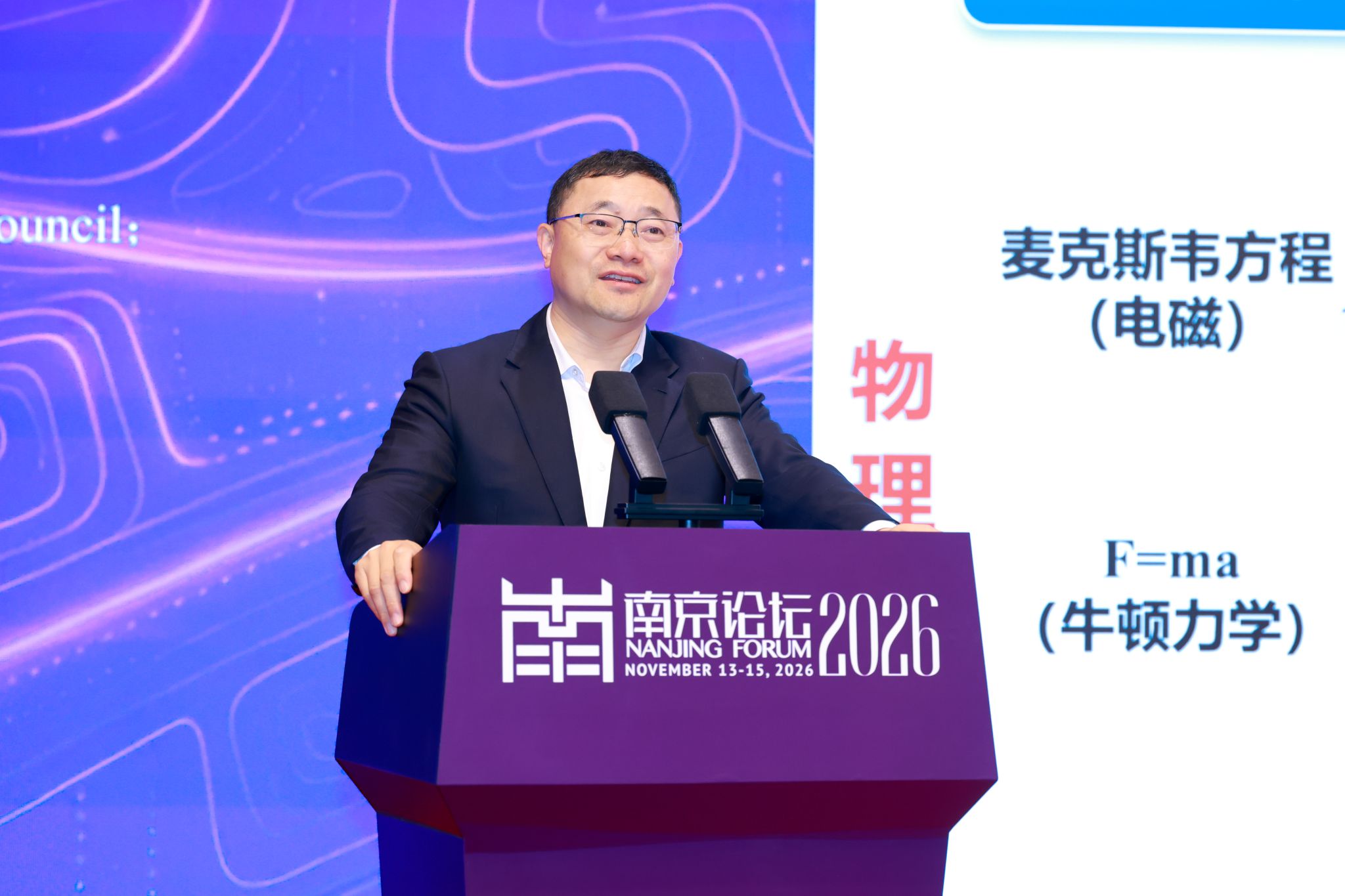
Chen Yunsong, Deputy Chair of NJU CPC Council, presided over the opening ceremony and delivered a speech during the closing ceremony. Chen noted that this year's forum brought new insights into the relationship between intelligent technologies and humanity's future. He emphasized that the empowerment of artificial intelligence requires the guidance of humanistic values, East Asia's cultural heritage demands imaginative contributions from digital intelligence, and the prosperity of the Asia-Pacific region necessitates intervention from academic communities. He called for sustained efforts to curate compelling narratives through high-quality topics, deepen understanding through meaningful dialogue, and foster interdisciplinary innovation through cooperative actions. He aimed to make the Nanjing Forum even more insightful, impactful, and resonant, contributing further to the advancement of East Asian cultural exchange and Asia-Pacific prosperity.
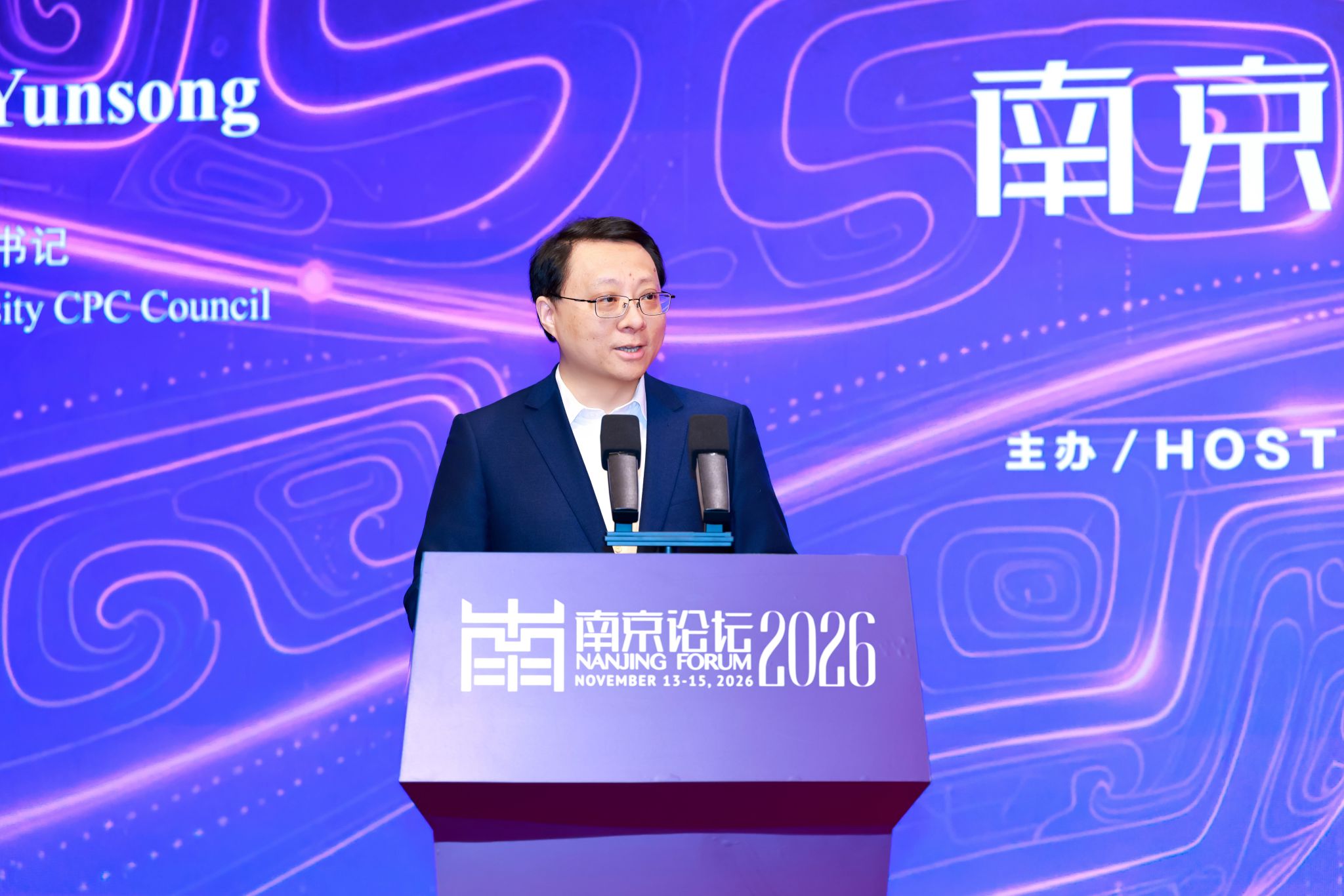
The closing ceremony was chaired by Gao Fang, Assistant President of NJU and Director of the Office of Humanities and Social Sciences of NJU.
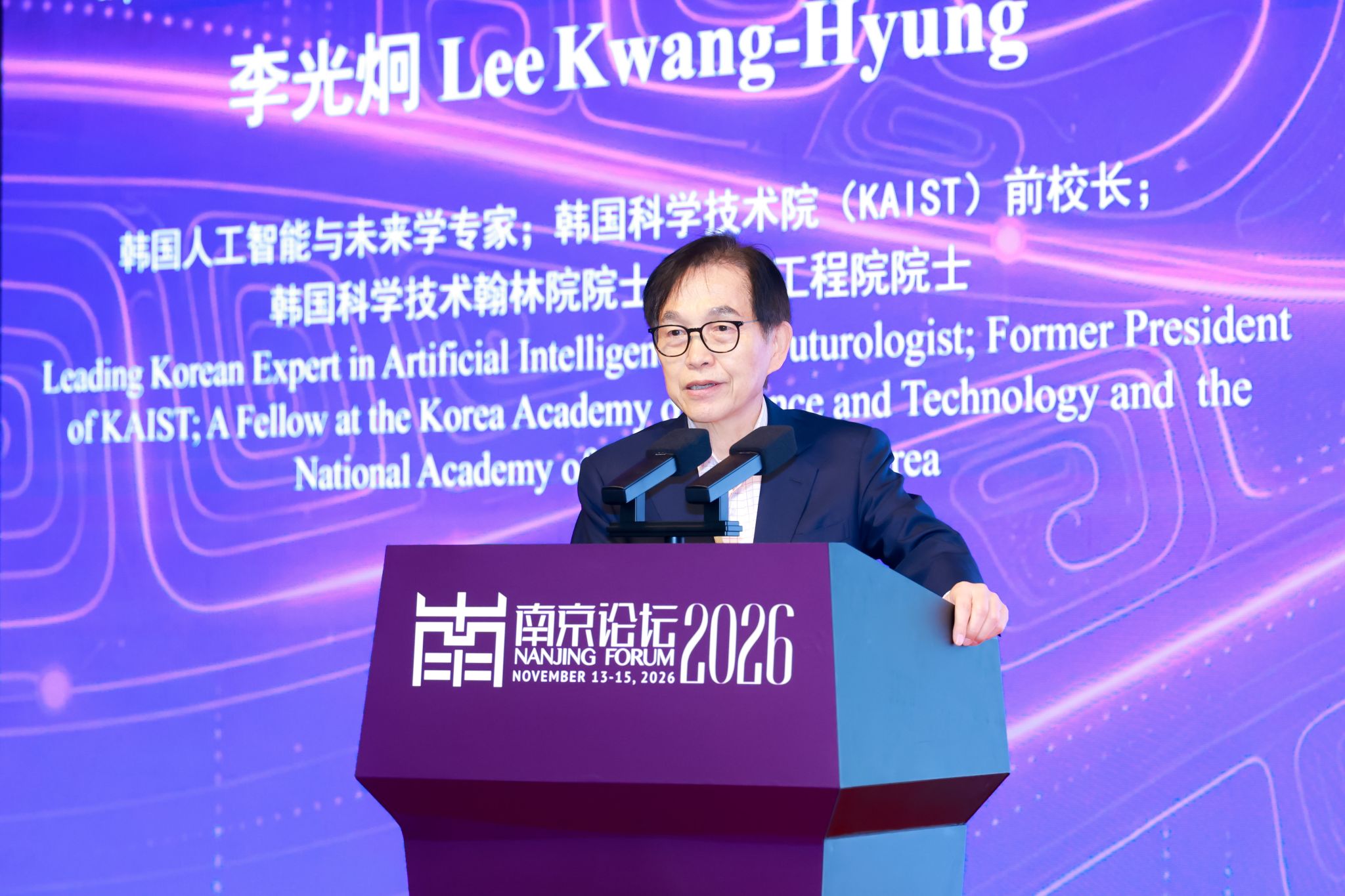
During the keynote session, Lee Kwang-Hyung, Fellow at the Korean Academy of Science and Technology and the National Academy of Engineering of Korea, and former President of the KAIST, examined the relationship between artificial intelligence and human consciousness, changes in human abilities, and human-machine interaction. He introduced the concept of "Human-AI Coexistence: Humanism 2.0," emphasizing the importance of independent human thinking and actively leveraging AI to enhance human capabilities while exploring the future of human-machine coexistence.
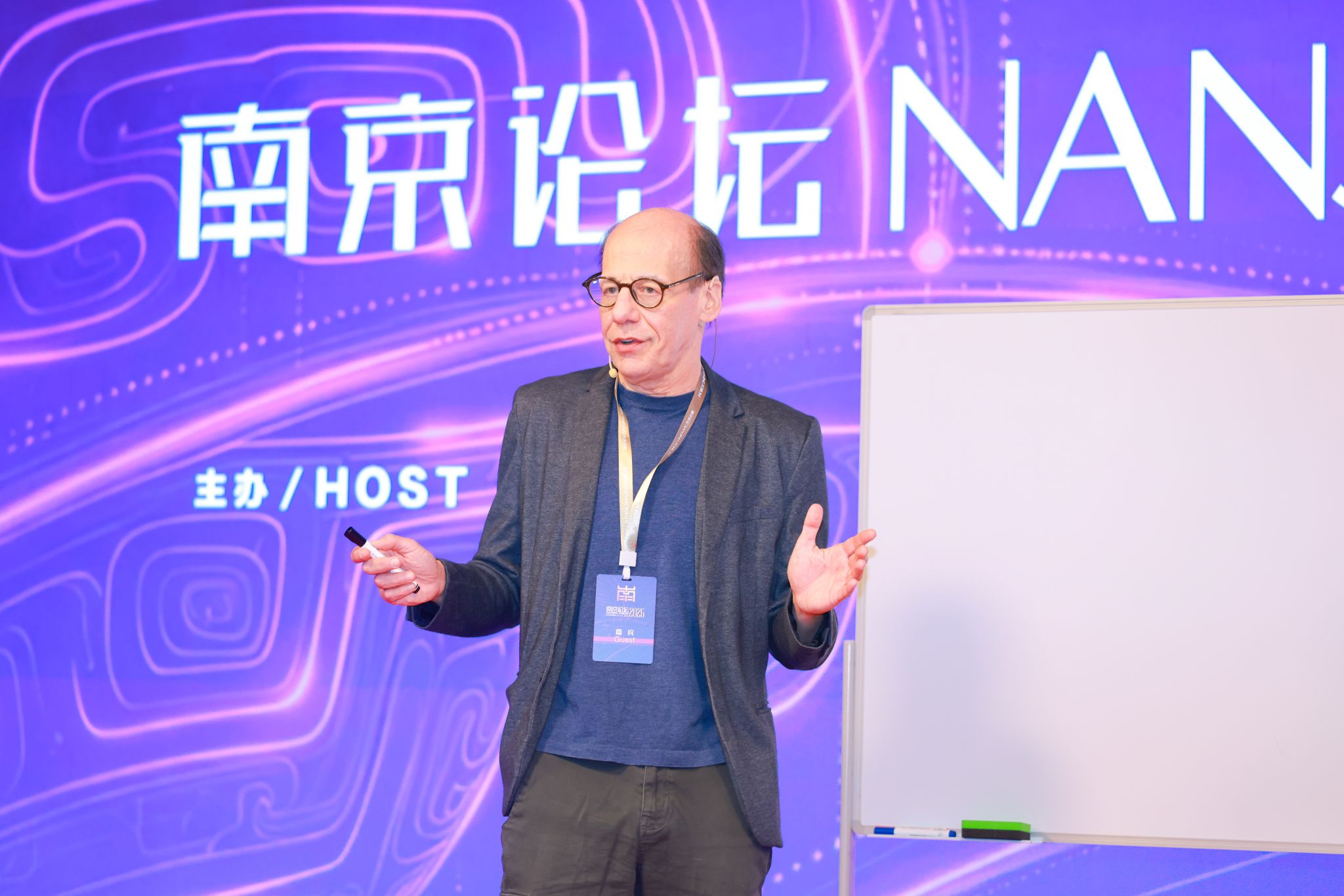
Steve Fuller, Fellow of the Academy of Social Sciences and Professor at the University of Warwick, analyzed the intellectual background behind AI controversies from the perspective of Western philosophy and theology. He explored how related ideas generate both intense expectations and concerns about AI.
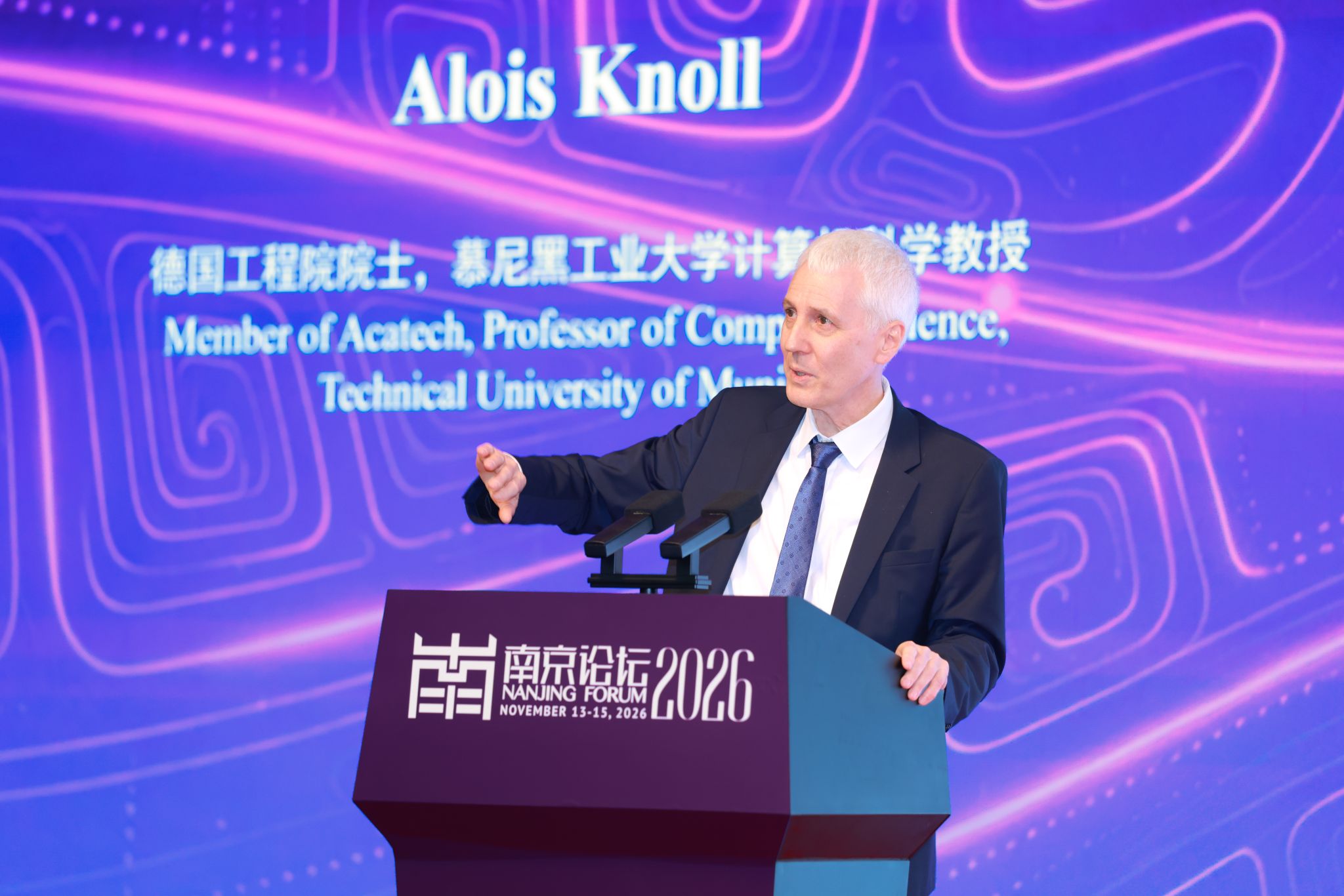
Alois Knoll, Academician of the German National Academy of Science and Engineering and Professor at the Technical University of Munich, reviewed the development of bionic and soft robotics, highlighting technological advancements and applications in embodied intelligence. He shared research on neural robotic platforms, bionic robotic mice, and flexible object assembly.
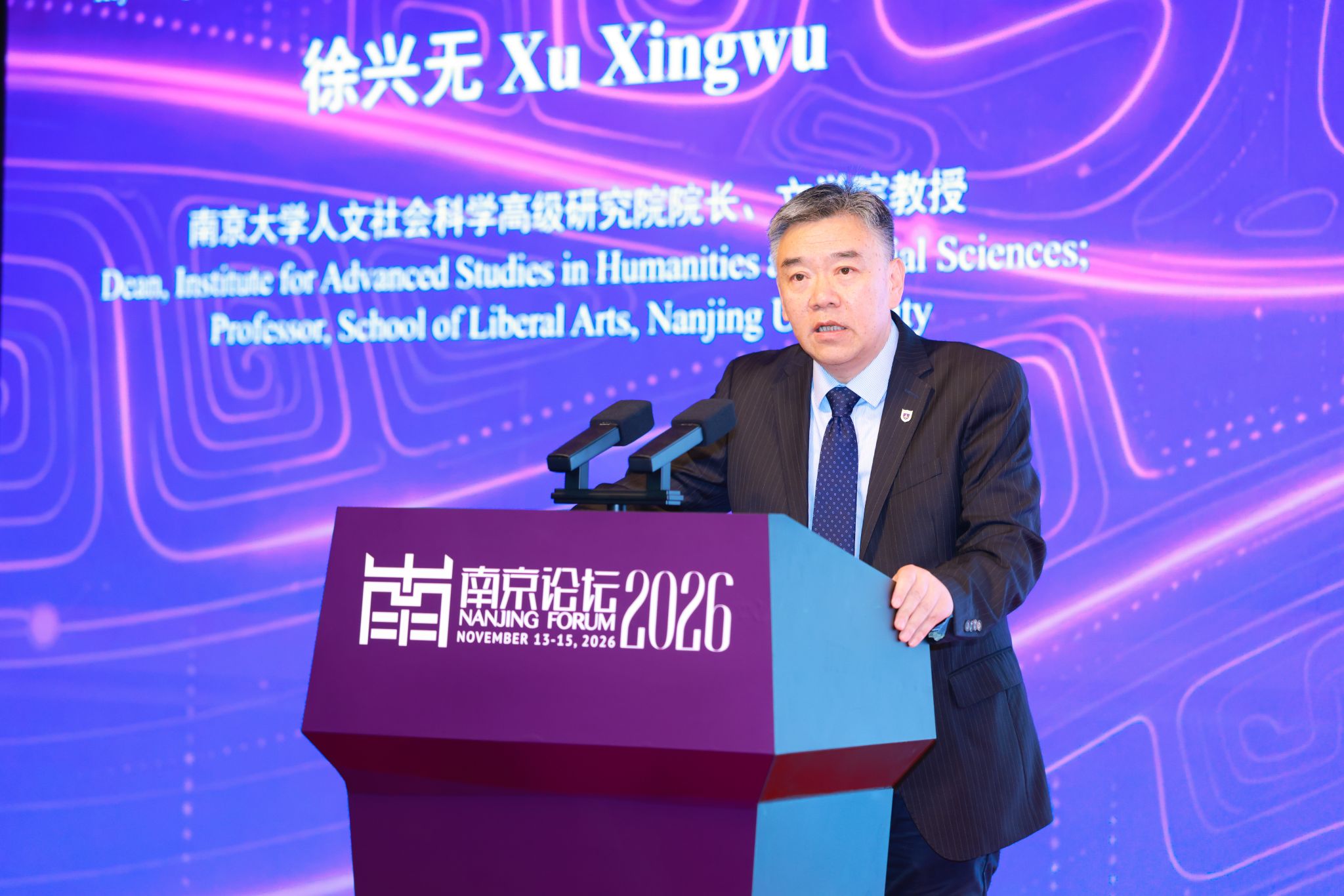
Xu Xingwu, Director of the Advanced Institute in Humanities and Social Sciences of NJU, drew upon ancient divination culture to trace the evolution of concepts regarding numerical intelligence, wisdom, and rationality. He argued that intelligence and wisdom emerge from historical cultural practices and emphasized the continued need for ethical wisdom in the development of digital intelligence civilization.
The keynote session was chaired by Kim Yoo-Suk, Director of the Chey Institute for Advanced Studies
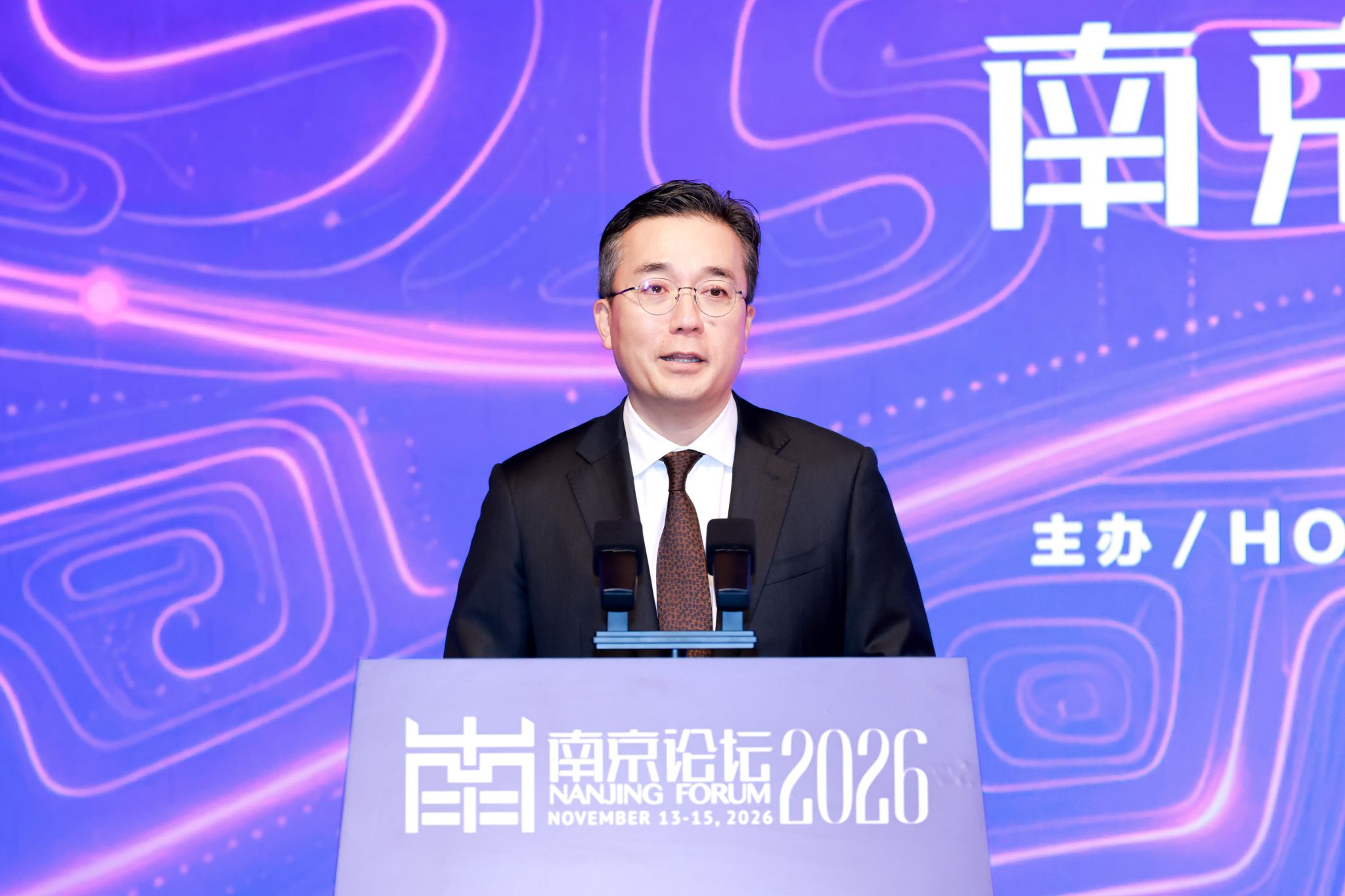
This year's forum featured five sub-forums: "Scenario-Driven Artificial Intelligence and Management Transformation," "Philosophy and Education in the Era of Artificial Intelligence," "Migration and Social Change in the Era of Artificial Intelligence," "Artistic Imagination in the Era of Artificial Intelligence," and "Technological Frontiers and Industrial Collaboration in Embodied Intelligence." Participating experts and scholars engaged in discussions and exchanged research findings, fostering interdisciplinary collaboration and exploring innovative paths for the transmission, development, and cross-cultural exchange of East Asian civilization in the age of digital intelligence.
Attendees included experts and scholars from domestic and international universities and research institutions, faculty and students from Nanjing University, and officials from relevant departments.