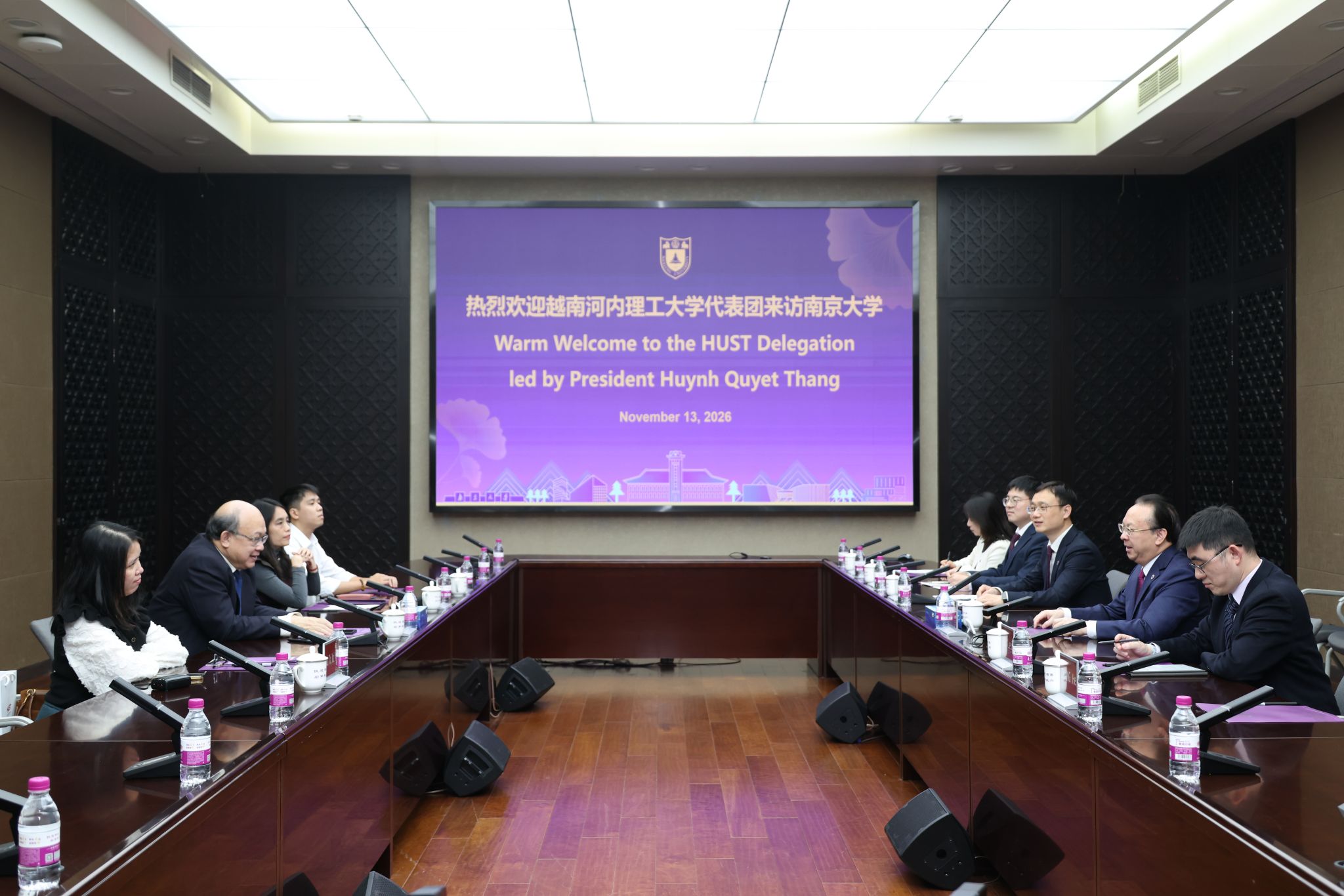
On November 13th, a delegation led by Huynh Quyet Thang, President of Hanoi University of Science and Technology, visited Nanjing University. Tan Tieniu, Chair of NJU CPC Council and Academician of the Chinese Academy of Sciences, met with the delegation at the Xianlin Campus. The two sides exchanged views on further deepening cooperation between the two universities.
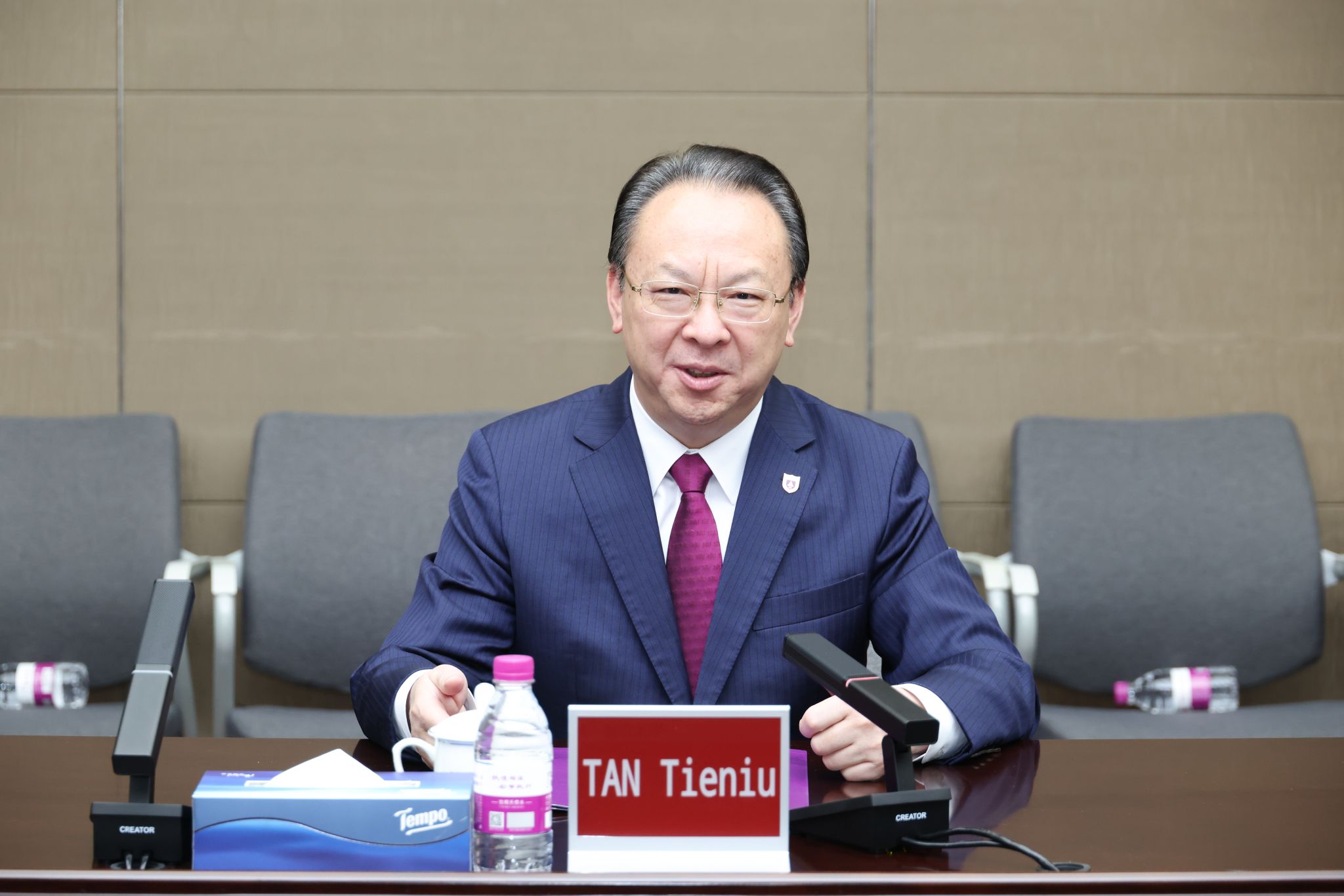
Tan Tieniu extended a warm welcome to Huynh Quyet Thang and his delegation. He provided the guests from afar with a brief introduction to the history of Jiangsu Nanjing and an overview of NJU's academic operations while recalling the history of friendly exchanges between the two universities. He mentioned that two years ago, he had led a delegation to Vietnam and visited Hanoi University of Science and Technology, where the two sides signed a framework cooperation agreement, laying a solid foundation for future collaboration. He stated that the two universities had already established clear frameworks of cooperation in fields such as artificial intelligence, water pollution control, energy conversion, and storage, and he expressed hope to use this visit as an opportunity to advance the implementation of the framework agreement, achieve more practical results, and further expand the depth and breadth of their cooperation.
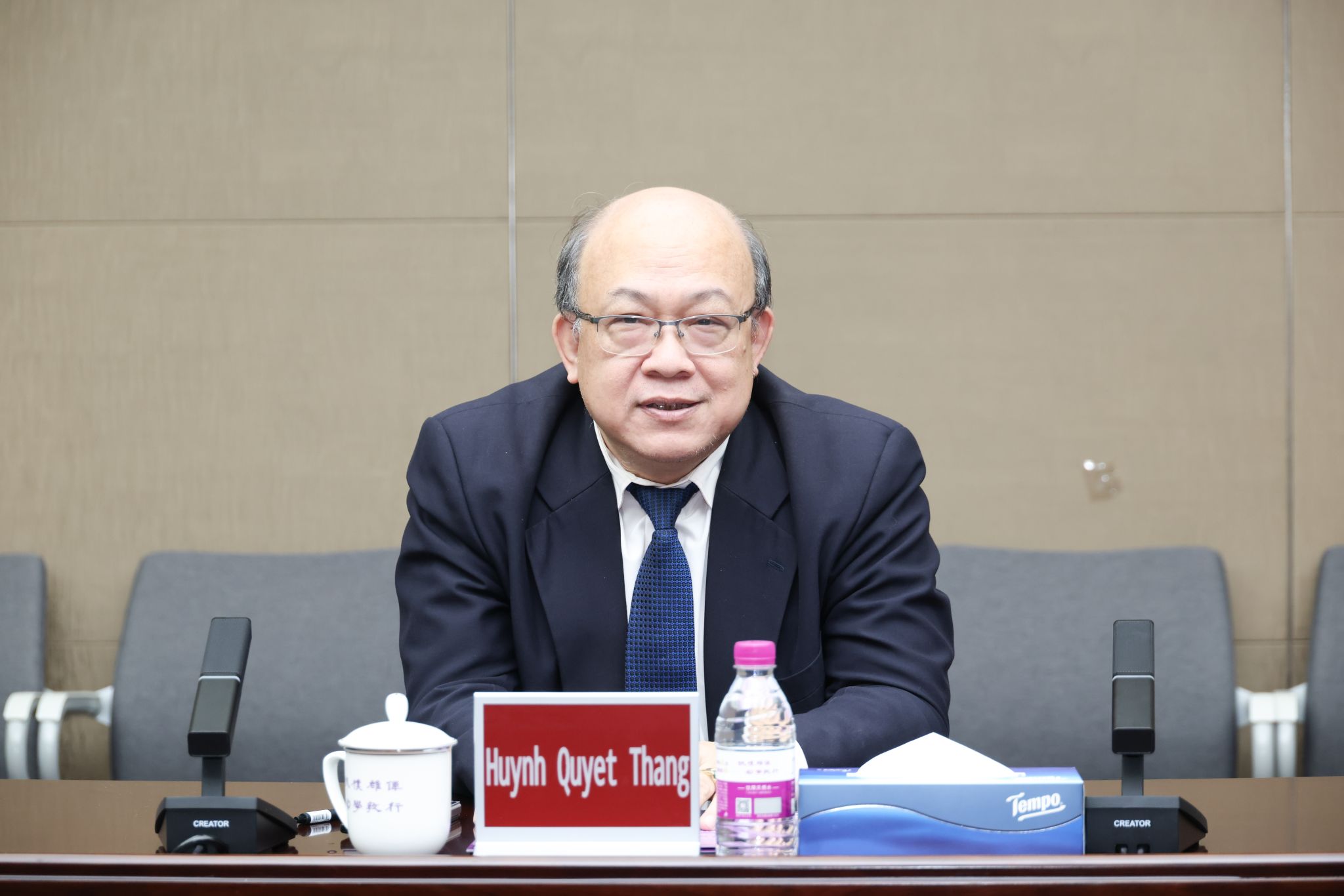
Huynh Quyet Thang expressed gratitude for the warm reception from NJU. He introduced the recent developments of Hanoi University of Science and Technology, shared aspects of their itinerary, and highlighted the outcomes of the visit. He mentioned that NJU, as a leading comprehensive university in China, has accumulated rich experience and achieved remarkable results in discipline development, talent cultivation, artificial intelligence, software engineering, and other fields. He expressed hope that the two universities would further enhance their collaboration based on their existing partnership, explore potential opportunities, and promote the implementation of substantial cooperation projects in areas such as talent cultivation and joint research.
During the meeting, the two sides discussed the key points of their next-stage cooperation, reached preliminary consensus on co-hosting academic seminars, and agreed on aligning strengths in key disciplines. They also had lively discussions on faculty and student exchanges, joint seminars, and collaborative research projects in fields such as software engineering and artificial intelligence.
Leaders from relevant schools and functional departments of both universities attended the meeting.